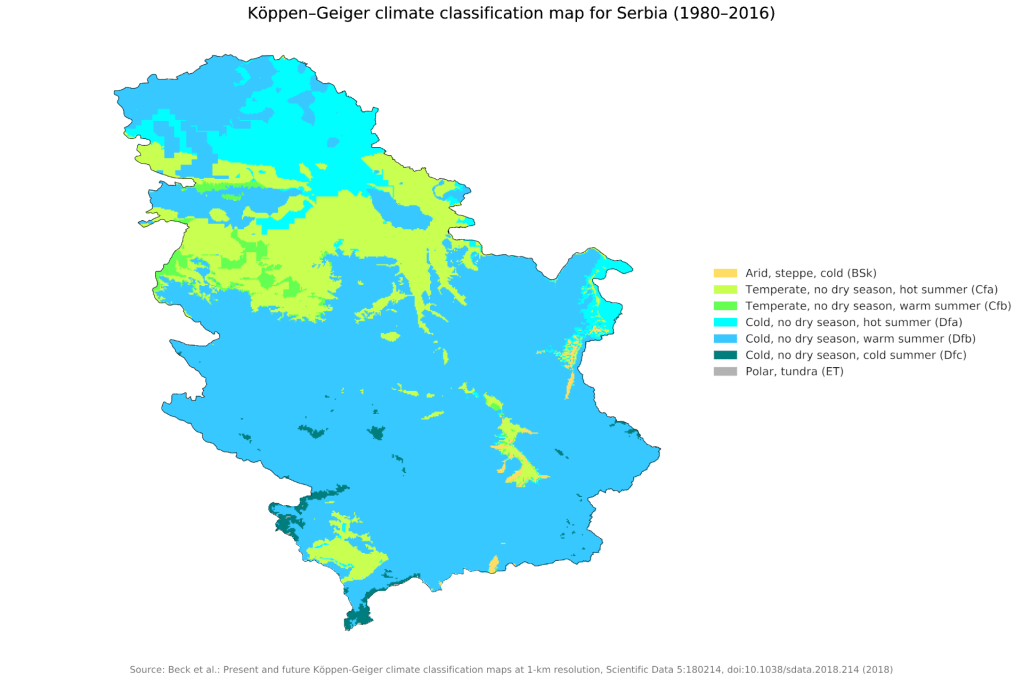
Serbia is a country with a diverse climate, ranging from continental in the north to Mediterranean in the south. The climate is influenced by various factors, such as the elevation, the distance from the sea, the river basins, and the winds. In this blogpost, we will explore the coldest and the hottest inhabited villages of Serbia, and why they have such extreme temperatures.
The Coldest: Karajukića Bunari
Karajukića Bunari is a village in the Pešter plateau, in southwestern Serbia. It is part of the municipality of Sjenica, which is one of the coldest places in Serbia, with an average annual temperature of 6.4 °C (43.5 °F). The village is located at an altitude of about 1,300 meters (4,265 feet) above sea level, and is surrounded by mountains that block the warm air masses from the Mediterranean Sea. The village is also exposed to the cold winds from Siberia, which can bring severe frosts and snowstorms. On January 26, 2006, the village recorded the lowest temperature ever in Serbia: −39.5 °C (−39.1 °F). The village is mostly inhabited by Bosniaks, who are engaged in agriculture and animal husbandry. The village is known for its natural beauty, its traditional architecture, and its cultural events, such as the Pešter Festival.
The Hottest: Smederevska Palanka
Smederevska Palanka is a town in central Serbia, near the Velika Morava river. It is part of the Podunavlje District, which is one of the hottest places in Serbia, with an average annual temperature of 12.2 °C (54 °F). The town is located at an altitude of about 120 meters (394 feet) above sea level, and is close to the Pannonian Plain, which has a continental climate with hot summers and cold winters. The town is also influenced by the warm air masses from the Mediterranean Sea and Africa, which can bring heat waves and droughts. On July 24, 2007, the town recorded the highest temperature ever in Serbia: 44.9 °C (112.8 °F). The town is mostly inhabited by Serbs, who are engaged in industry, trade, and tourism. The town is known for its historical monuments, its cultural events, and its mineral springs.
The Reason for Variation
The climate in Serbia is influenced by several factors, including the country’s location, elevation, proximity to the sea, and exposure to different air masses. Serbia is located in southeastern Europe, and its climate is influenced by the Mediterranean Sea, the Atlantic Ocean, and the Siberian air masses. The northern part of Serbia has a continental climate, with cold winters and hot summers, while the southern part has a more Mediterranean climate, with mild winters and hot summers. The differences in elevation also play a role in the climate variation, with the higher regions being colder than the lower regions. The proximity to the sea also affects the climate, with the coastal regions having a more moderate climate than the inland regions. Finally, the exposure to different air masses from different directions also contributes to the climate variation. For example, the cold winds from Siberia can bring severe frosts and snowstorms, while the warm air masses from the Mediterranean Sea and Africa can bring heat waves and droughts.
According to a source, the climate in Serbia is also affected by the Azores anticyclone and Icelandic cyclone, which are under constant influence, as well as the Siberian anticyclone in the winter period, and the Karachi (or Arabian) depression in summer. These air masses can cause different weather conditions in Serbia, depending on their geographical origins. The source also states that differences in elevation, proximity to the Adriatic Sea and Aegean Sea, large river basins, and exposure to the winds account for climate differences.
In addition to these factors, human activities such as deforestation, urbanization, and industrialization can also affect the climate in Serbia. Deforestation can reduce the amount of moisture in the soil and increase the risk of floods and landslides, while urbanization can create “heat islands” that trap heat and increase the temperature in the surrounding areas. Industrialization can also contribute to air pollution, which can affect the quality of the air and the health of the people living in the area.
 Micah Zarin's Blog
Leave a comment