Anxiety is the absence of worry. Well, not really. But often it is.
I should explain what I mean by that because it sounds like nonsense and might be nonsense but I do not think it is. Worry is specific. You worry about the test, the friend, the relationship, the thing you said to your mother that you cannot take back. And because it points at something, it can, in principle, be resolved.
Anxiety, on the other hand, does not have somewhere to go. Anxiety is the structure of worry without the content. It is the feeling that something is wrong without any specific thing being wrong. You cannot resolve it because there is nothing to resolve.
There is a reason zebras do not get ulcers. The zebra sees a lion, the zebra runs, the zebra either escapes or gets eaten. Either way, the stress response ends. The zebra does not lie awake at night thinking about lions. The zebra does not construct elaborate hypothetical scenarios in which lions might appear. The zebra does not worry about whether it is the kind of zebra that handles lions well or whether other zebras are better at lion avoidance. The zebra just grazes, and then runs, and then grazes again. And this is not because the zebra is stupid. But rather, it is because the zebra has not made the error of abstracting its problems into a permanent condition.
Humans, on the other hand, did indeed make that error. Somewhere along the way we developed the ability to simulate threats that are not present. And we got so good at it that we forgot how to stop. We can be afraid of things that do not exist, have never existed, and will never exist. We can be afraid of concepts. We can be afraid of the future, which is just a concept we invented to organize our fears. No other animal is afraid of the future. No other animal has a future. They just have now, and then another now, and then another, until the nows stop.
Now, I am not saying we should be more like zebras. In fact, the same capacity that lets us build cathedrals and write symphonies and land on the moon also lets us torture ourselves about things that have not happened yet and may never happen. The gift and the curse are the same gift. You can not get one without the other.
You see, I used to believe anxiety was a problem to be solved. I thought there was some configuration of habits and supplements and therapeutic techniques that would make it go away, and my job was to find that configuration, and once I found it I would be fixed, and then I could start living. I treated myself like a machine that was malfunctioning. I approached my own existence like a systems engineering problem.
This did not work. Or rather, it worked a little, but it did not solve the underlying issue, which is that I am not a system to be engineered. I am a person. And people are not optimizable. You cannot minmax a human life. You cannot find the optimal strategy for being the best version of yourself, because “best” is not a coherent concept when applied to a person, and “version” implies that there is some other you that you could be instead of the you that you are, and “yourself” is not a fixed target but a moving process, and the whole framework is wrong from the start.
Think about what optimization would actually mean. If you were trying to maximize your life, you would never drink champagne, because the calories are empty and the money could be invested and the alcohol is technically a poison. You would never go in the ocean, because the salt is bad for your skin and there are things in there that can kill you and the time could be spent on something more productive. You would never stay up late talking to someone you love, because sleep is important and the conversation will not be efficiently structured and you could be recovering for tomorrow’s obligations. You would never do any of the things that make life worth living, because none of them optimize for anything. They just are. They are good because they are good, not because they maximize some metric.
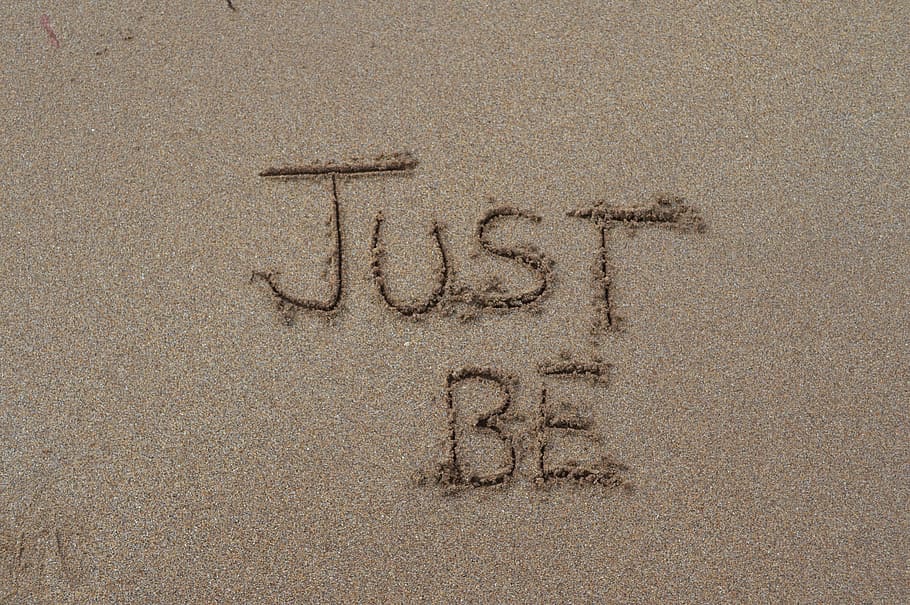
The optimal strategy for being the best version of yourself, paradoxically, is to stop trying to be the best version of yourself. It is to just be. Present tense, no object. Not being something, not being someone, not being better or worse or more or less. Just being, the way a river is just rivering, ongoing and directionless and not trying to get anywhere.
I know how this sounds. It sounds like giving up. It sounds like an excuse to stop trying. But that is not what I mean. You can still do things. You can still want things. You can still work toward things. The difference is whether you are doing those things in order to become acceptable, or whether you are doing them because you are already acceptable and this is just what acceptable people do. The first posture is exhausting. It treats your current self as a rough draft, something to be revised until it is good enough to publish. The second posture is something else. It treats your current self as already the final version, not because you are perfect but because there is no other version coming. This is it. You are already here.
I spent so long waiting to arrive. Waiting to be fixed, to be healed, to be optimized, to be the person I was supposed to be. I kept thinking there was a threshold I had to cross before I was allowed to just exist without apology. Lose the weight, get the grade, fix the anxiety, achieve the thing, and then, finally, I could rest. But the threshold kept moving. Every time I reached it, there was another one behind it. The goalposts were on wheels. I was chasing a finish line that did not exist.
Here is the thing I wish someone had told me earlier, although I probably would not have believed them: you are not a problem to be solved. You are not a machine to be fixed. You are not an optimization target. You are only human, and humans are not the kinds of things that get solved. Humans are the kinds of things that get lived.
And being a human, by the way, is not a consolation prize. We say “only human” like it is a limitation, like humanity is the bargain bin of existence. You are only human. As if there were something better you could be, as if humanity were a constraint rather than a miracle. But think about what it means to be human. You get to experience things. You get to love people. You get to watch the sun do that thing it does in the evening when the light goes sideways and everything turns gold. You get to eat food that tastes good for no reason other than that it tastes good. You get to laugh at things that are not even that funny, just because laughing feels nice. You get to be in a body, which is insane, which is the most improbable thing imaginable, which is a series of chemical reactions that somehow learned to feel. You are not only human. You are human. That’s pretty fucking cool.
 Micah Zarin's Blog
Leave a comment